Motoring Lawyer in Nottingham Magistrates Court
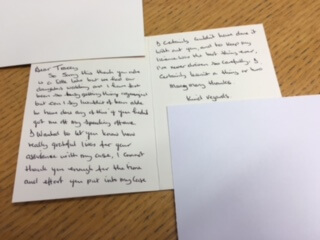
Following a hearing at Nottingham Magistrates’ Court this week, David Renwick thanked motoring lawyer Steve Williams of Forrest Williams Legal Ltd for the forceful mitigation which persuaded the District Judge to award 6 penalty points instead of imposing a disqualification for his speeding offence.
David, who works for a dealership in the city which sells high-performance cars, had stressed to Steve during the preparation of his case that losing his driving licence, even for a short period of time, would create great difficulties as his job means he has to take customers out on test drives every working day.
Motoring lawyer Steve Williams had advised David that the magistrates’ sentencing guidelines indicate that the speeding offence in question – 55mph in a 30mph limit – would likely be punishable by way of a disqualification within the range 7-56 days and that this was the outcome he should prepare himself for. The anticipated penalty for this speed, as well as a fine and other court costs, would be a disqualification of around 28 days.
However, our motoring lawyer assured David that it is sometimes possible, and especially so when a case has been professionally prepared and conducted in court, to persuade the Magistrates or District Judge to take into account the full background to the case and be more lenient when sentencing.
Steve realised that the bald facts of the speeding offence looked grim. He knew the court would take the third category speeding offence very seriously, and therefore be inclined to sentence David harshly in line with the sentencing powers laid down in the guidelines.
It would not be easy, Steve knew, but with more than 25 years’ experience working within the criminal justice system, he also knew exactly how best to prepare the case for court, what to say and just how to say it.
It is this level of experience and expertise, gained as a result of representing a great many clients charged with speeding offences, which sets Steve apart as a motoring lawyer and results in people calling our office and asking for him by name – not just for local court hearings, but for cases being heard in courts across the whole of England and Wales.
Steve took the time to discuss the full background with David and then, on the day of the hearing, made the court aware of the facts. On the date in question, David had been out on a test drive with a customer and was driving along a familiar road.
However, the speeding offence did not occur as a result of a blatant disregard for the legal requirement to drive at or below 30mph (as the court might otherwise have assumed), but because David was driving a new, turbo-charged high-performance vehicle that he was unfamiliar with. David told us that he tapped the accelerator and the car very quickly reached the speed recorded before he could apply the brake to slow the car down.
Whilst David accepted liability for the speeding offence, and pleaded guilty to it, he said it was important that the court understand he was not a ‘boy racer’ and that, in fact, he relied on maintaining his driving licence in order to do the job he had enjoyed doing for the last 20 years.
In addition, David told us he had held his driving licence for around 30 years and that it was clean, without any endorsements in the last several years.
Only by listening carefully to David’s story was our motoring lawyer, Steve Williams, able to first formulate a plan for the careful preparation of his case for court, and then conduct the mitigation of his case in a knowledgeable and persuasive way. David told us he was delighted with the outcome.
If you have been charged with a speeding offence and fear you may be disqualified from driving, call our office today on 01623 397200 for free, initial advice.